IVF in Indore, complete guide -Dr Vedant Jain- IVF specialist in Indore

Dr. Vedant Jain
IVF Consultant & Gynecologist
October 4, 2026
11 min read
Below is a patient-first version written in a Times of India-style, simple English—informative rather than promotional, while naturally building SEO around Dr Vedant Jain, IVF and ICSI in Indore.
IVF in Indore: A Complete Patient Guide to Choosing the Right IVF Clinic
The first thing most couples do after being advised to consider IVF is simple: they start searching.
Usually, the search begins on Google. Then come WhatsApp groups, friends and relatives who have gone through IVF, Instagram reels, YouTube videos and, often, a trusted gynaecologist who recommends a fertility specialist.
And almost every couple is looking for the same thing — a high IVF success rate.
But choosing an IVF clinic is much more than choosing a number.
IVF is not the end of the fertility journey. It is the beginning of a process that should ultimately lead to a healthy live birth. That means the quality of the entire IVF journey matters — from the first consultation and stimulation plan to egg collection, sperm preparation, fertilisation, embryo culture, embryo transfer and pregnancy care.
If I had to choose an IVF clinic for myself
If I were choosing an IVF clinic for myself or my family, I would probably visit four or five clinics before making a decision.
I would look for a clinic with good patient feedback, a clean and well-organised setup and transparent pricing.
But I would not stop there.
I would sit with the doctor and see how much time they give me.
Can I ask questions?
Does the doctor explain why IVF has been recommended in my particular case?
Do they discuss alternatives?
Do they explain what happens to my eggs, sperm and embryos after the procedure?
And most importantly, do I feel that the doctor understands my case, rather than simply putting me into a standard IVF protocol?
These questions can be more important than simply asking, “What is your IVF success rate?”
IVF success rate is important — but it is not the whole story
Success rates matter. Every patient has the right to ask about them.
But an IVF success rate without context can be difficult to understand.
Age, ovarian reserve, egg quality, sperm quality, embryo quality, diagnosis, previous IVF attempts and the number of embryos transferred can all affect the outcome.
For example, the expected outcome for a 29-year-old woman with good ovarian reserve may be very different from that of a 38-year-old woman with low ovarian reserve.
Similarly, IVF for tubal blockage is not exactly the same clinical challenge as IVF in severe male infertility or azoospermia.
So instead of asking only:
“What is your IVF success rate?”
also ask:
* What is the success rate for women of my age?
* How do you define success — positive pregnancy test, clinical pregnancy or live birth?
* What factors in my case may reduce my chances?
* What will you do differently if the first IVF cycle does not work?
* How does your laboratory manage embryos?
That last question is particularly important.
The heart of IVF is the laboratory
Patients usually spend most of their time thinking about the doctor, injections and embryo transfer.
But between egg collection and embryo transfer, there is an entire laboratory process that patients may never see.
The eggs are identified and handled.
Sperm is prepared.
Eggs may be denuded.
Fertilisation is assessed.
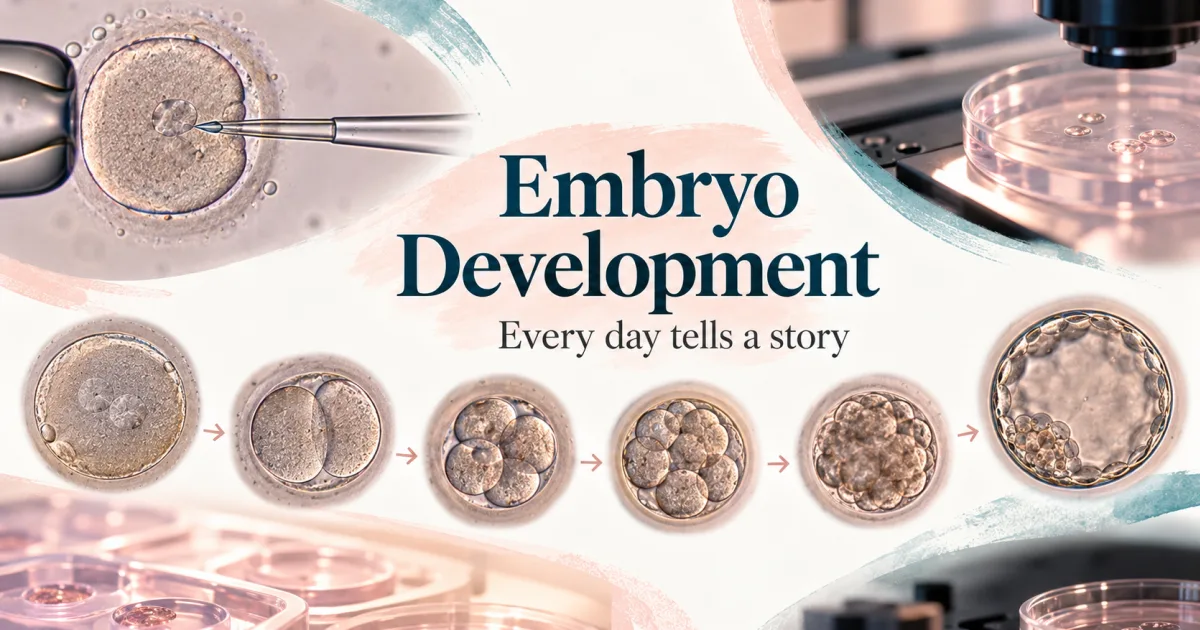
Embryos are cultured for several days.
Embryos may be frozen and stored.
In selected cases, genetic testing may be considered.
All of this happens inside the embryology laboratory.
This is why, when choosing an IVF and ICSI centre in Indore, I would want to understand the laboratory as much as I understand the doctor’s consultation.
Ask about the embryology team
One question I would definitely ask is:
“Who is looking after my embryos in the laboratory?”
Is there a dedicated, experienced embryology team?
Is there a full-time embryologist?
How are embryos handled and monitored?
What happens if there is a power failure or equipment problem?
Are there backup systems for critical laboratory equipment?
These may sound like technical questions, but IVF is a highly controlled laboratory process. Small details in laboratory management can matter.
For patients undergoing ICSI, where a single sperm is injected directly into an egg, the embryology laboratory becomes even more central to the treatment process.
What about PGT-A, embryo freezing and embryo glue?
Many patients now walk into an IVF consultation already knowing terms such as:
PGT-A. Embryo freezing. Embryo glue. Blastocyst. ICSI. Time-lapse imaging.
Most of this information comes from YouTube, Instagram and Google.
The problem is that knowing the name of a technology does not always mean knowing whether it is useful for your case.
For example, PGT-A may have a role in selected patients, but it is not automatically required for every IVF cycle.
Similarly, embryo freezing and time-lapse embryo monitoring are tools used in specific clinical and laboratory situations.
A good IVF consultation should therefore not be a list of technologies.
It should answer a much simpler question:
“Which of these options, if any, actually makes sense for me?”
Questions I would ask before choosing an IVF clinic in Indore
If I were sitting across the table from an IVF specialist, I would ask some very basic questions.
1. Is the clinic registered under India’s ART framework?
Ask whether the clinic is registered under the applicable Assisted Reproductive Technology (Regulation) Act and Rules.
2. Who is the embryologist?
Ask whether there is a dedicated embryology team and who will be responsible for the laboratory during your treatment.
3. How many embryos do you usually transfer?
Ask about the clinic’s approach to embryo transfer and why a particular number is recommended for someone of your age and clinical situation.
4. What laboratory facilities are available?
Ask whether the laboratory has facilities such as advanced embryo culture systems and, where clinically appropriate, time-lapse embryo monitoring.
5. What happens during a power or equipment failure?
This may sound like an unusual question, but IVF laboratories depend on stable temperature, gases, electricity and equipment.
Ask about backup power, backup incubators and emergency laboratory protocols.
6. How is the laboratory environment controlled?
You can ask about air handling, temperature, humidity, gas monitoring and laboratory quality-control systems.
7. Is the laboratory NABH or ISO certified?
If the centre claims certification, ask what exactly is certified, by whom and what the certification covers. Certification alone should not replace understanding the actual laboratory practices.
8. What will my total IVF treatment cost?
Don’t ask only about the headline package.
Ask what is included and what may be charged separately — medicines, blood tests, anaesthesia, ICSI, embryo freezing, storage, additional procedures and other laboratory services.
A transparent estimate is much more useful than a very low starting price.
Choosing an IVF doctor is also about communication
Fertility treatment can involve weeks or months of decisions.
There may be injections, scans, blood tests, egg retrieval, fertilisation, embryo development, freezing and transfer.
It can become confusing very quickly.
The doctor therefore needs to do more than prescribe medicines.
They need to explain the why behind the treatment.
This is particularly important in more complex cases such as:
* Low AMH
* Previous failed IVF
* Azoospermia and severe male infertility
* Repeated IUI failure
* Tubal factor infertility
* Thin endometrium
* Reduced ovarian reserve
* Advanced maternal age
In these situations, understanding the complete clinical picture can make a difference to how an IVF plan is designed.
Why the doctor and embryology team need to work together
IVF sits at the intersection of gynaecology, reproductive medicine, and embryology.
The doctor understands the patient’s medical and reproductive condition.
The embryologist understands what is happening to the eggs, sperm and embryos in the laboratory.
Good communication between these two sides is essential.
For a patient, this means the treatment should not feel like two separate departments — one looking after the woman and another looking after the embryos.
The entire team should understand the same treatment plan.
IVF in Indore: More choices can also mean more confusion
Indore today has many fertility clinics and IVF centres, giving patients more choices than ever before.
That is a positive thing.
But it can also become overwhelming.
One clinic may talk about success rates.
Another may focus on technology.
Another may advertise an IVF package.
Another may promote a particular treatment or laboratory technique.
Meanwhile, patients are already consuming large amounts of information from social media.
The answer is not to believe everything you see online.
The answer is to ask better questions.
What should you actually compare between IVF clinics?
Instead of making a decision based on one Google review, one friend’s recommendation or one advertised success rate, compare these factors:
Doctor
* Does the doctor understand your diagnosis?
* Does the doctor explain the treatment clearly?
* Do you get enough consultation time?
Embryology laboratory
* Is there a dedicated embryology team?
* How are embryos cultured and monitored?
* What backup systems are available?
Treatment planning
* Is the treatment personalised?
* Are alternatives discussed?
* Is the reason for IVF clearly explained?
Transparency
* Is pricing explained clearly?
* Are additional costs disclosed?
* Are you given realistic expectations?
Patient experience
* Are appointments organised?
* Can you contact the team when you have a genuine concern?
* Does the clinic explain what happens at every stage?
Outcome
* What does the clinic mean by “success”?
* Can results be understood according to age and diagnosis?
* Is the ultimate goal a healthy live birth rather than simply a positive pregnancy test?
Where does Dr Vedant Jain fit into this approach?
When considering IVF and ICSI in Indore, patients should have the freedom to meet multiple doctors and decide who they are most comfortable with.
Dr Vedant Jain, MBBS, MS (OBGY), DNB, approaches fertility treatment with an interest in understanding both the clinical and laboratory sides of IVF.
His experience with reproductive medicine and exposure to embryology and andrology laboratory work has shaped an approach where the patient’s diagnosis and the embryo laboratory are considered together.
For patients dealing with conditions such as low AMH, previous IVF failure, azoospermia and other complex fertility problems, this understanding can be particularly relevant.
The aim should not simply be to start an IVF cycle.
The aim should be to understand why IVF is being recommended, what can realistically be achieved, and how every part of the treatment can be planned around the individual patient.
The final checklist before you choose an IVF clinic
Before paying for an IVF cycle, take a piece of paper and write down these questions:
□ Is the clinic registered under the ART framework?
□ Who is my treating doctor?
□ Who is the embryologist?
□ Is there a dedicated embryology team?
□ How does the laboratory maintain controlled conditions?
□ What backup systems are available?
□ How many embryos are normally transferred and why?
□ Do I actually need ICSI, PGT-A or other additional procedures?
□ What is included in the quoted IVF cost?
□ What costs are additional?
□ What does the clinic mean by IVF success?
□ What is my realistic chance based on my age and diagnosis?
□ What is the plan if the first cycle does not work?
And finally:
□ Does my doctor listen to me?
That last question is often overlooked.
IVF is a journey, not a package
Choosing an IVF centre is one of the most important decisions a couple makes during fertility treatment.
Don’t choose a clinic only because it has the highest number on an advertisement.
Don’t choose only because a friend had a successful pregnancy there.
And don’t choose only because a package appears cheaper.
Visit clinics. Ask questions. Understand the laboratory. Understand the treatment plan. Discuss the costs. Speak to the doctor.
Most importantly, choose a team that makes you feel that your case is being understood, not simply processed.
Because the real goal of IVF is not simply an egg retrieval, an embryo transfer or even a positive pregnancy test.
The goal is a healthy baby and a healthy mother — and the journey towards that goal begins with choosing the right team.
For patients looking for IVF and ICSI in Indore
Patients considering IVF treatment, ICSI, low AMH treatment, treatment after previous IVF failure or fertility treatment for male infertility and azoospermia in Indore can consult a qualified fertility specialist and compare their options before making a decision.
Dr Vedant Jain, MBBS, MS (OBGY), DNB, is associated with fertility care in Indore and focuses on personalised evaluation and treatment planning across female and male infertility.
Dr Vedant Jain believes IVF is fundamentally simple: identify a healthy embryo, place it in the uterus at the right time, and give it the right conditions to develop. More tests, medicines or technologies do not automatically mean better results. The focus should be on getting the basics right.
Share this article
Book an appointment
Consult with our specialist to know more.