Low AMH and Previous IVF Failure: What Patients in Indore Should Know

Dr. Vedant Jain
IVF Consultant & Gynecologist
October 4, 2026
6 min read
For many women, few words create as much anxiety as “Your AMH is low.”
The next question is often, “Will I need donor eggs?”
Not necessarily.
Low AMH mainly suggests that the number of eggs available in the ovaries may be lower. It can help doctors predict how the ovaries may respond to IVF medicines, but AMH is not a direct test of egg quality. A low AMH report alone does not mean that a woman cannot conceive with her own eggs.
This distinction is important, especially for women who come to an IVF clinic already worried after reading about AMH on Google, YouTube or Instagram.
Low AMH does not always mean poor-quality eggs
There is a thin line between low AMH with potentially usable eggs and low AMH where egg quality may also be affected.
Two women with the same AMH can have very different IVF outcomes.
Age, ovarian response, number of mature eggs, sperm quality, fertilisation and embryo development all play a role.
So when a patient comes with a low AMH report, the consultation should not end with, “Your AMH is low.”
The more important questions are:
* How old is the patient?
* What is her antral follicle count?
* How have her ovaries responded in the past?
* How many mature eggs were obtained?
* How did fertilisation occur?
* How did the embryos develop?
These details tell us much more about the individual patient.
Every IVF cycle is diagnostic as well as therapeutic
One idea I strongly believe in is that every IVF cycle is both diagnostic and therapeutic.
While the main purpose is to achieve pregnancy, an IVF cycle also gives doctors and embryologists a lot of information.
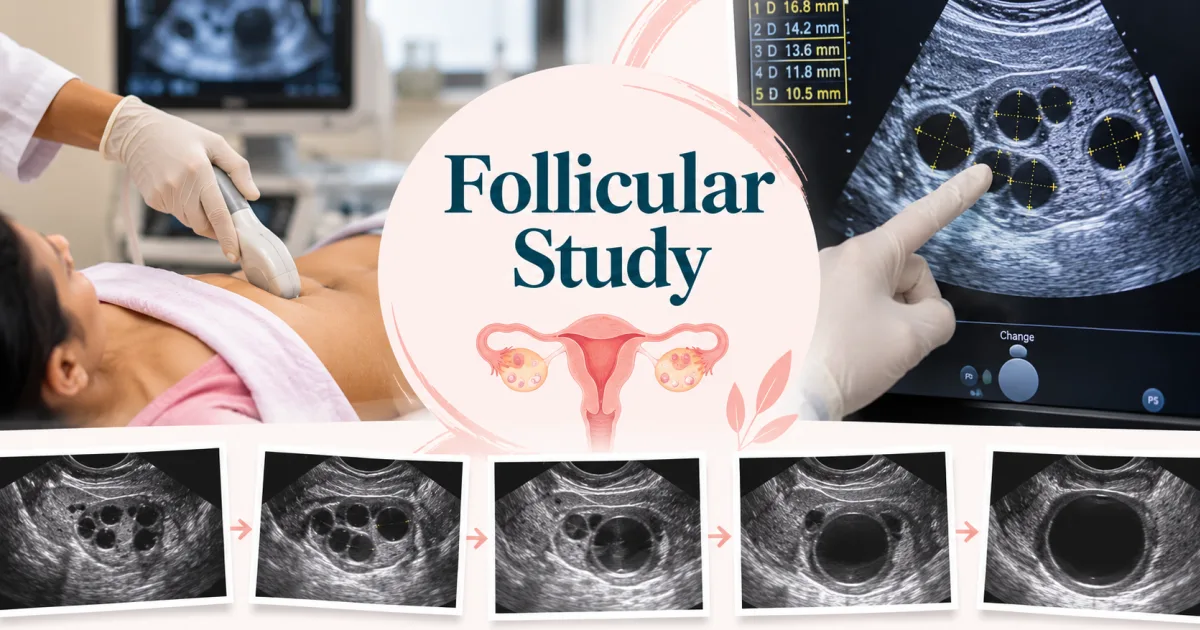
We see how the ovaries respond to stimulation, how many follicles grow, how many eggs are retrieved and how many are mature.
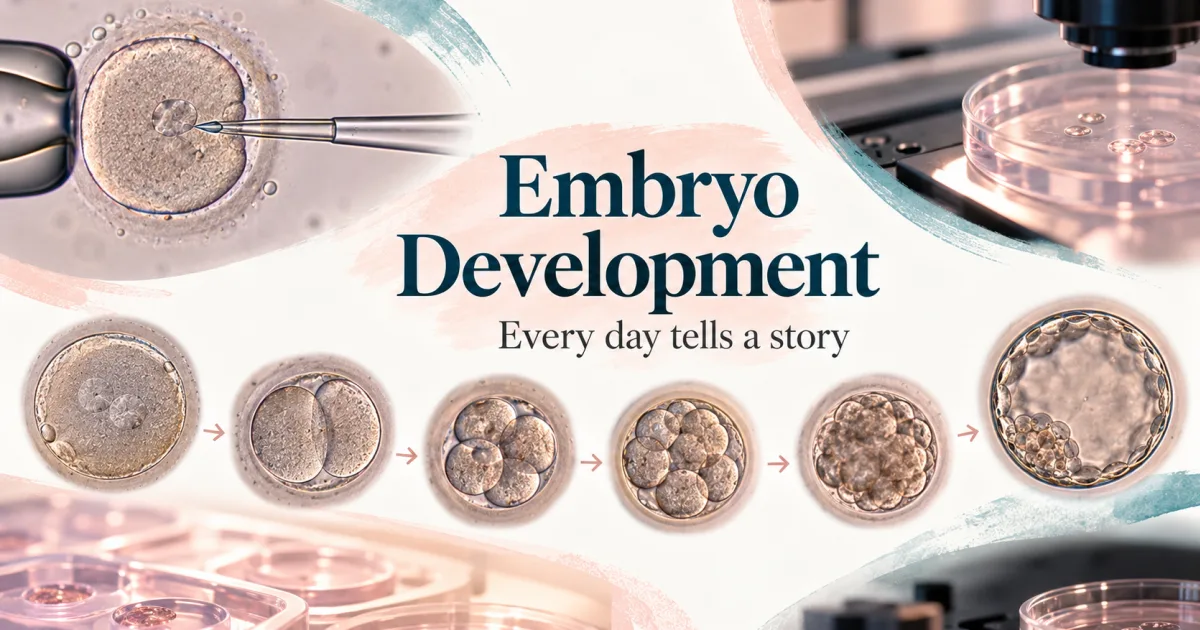
In the embryology laboratory, we see fertilisation and how embryos develop over the following days.
But there is a problem.
The couple usually sees only the final result:
Positive or negative pregnancy test.
If the important details of the cycle are not properly recorded and discussed, much of this information can be lost.
After a failed IVF cycle, “the embryo didn’t implant” may not be the whole answer
A couple returns after a negative pregnancy test and asks the most natural question:
“Why did it fail?”
One common answer is:
“The embryo didn’t implant.”
That tells us what happened, but not necessarily why.
The better questions are:
* How many follicles developed?
* How many eggs were retrieved?
* How many were mature?
* How many fertilised?
* How did the embryos develop?
* At what stage did development slow or stop?
* Were blastocysts formed?
* How was the uterine lining?
* What did the embryologist observe?
A failed IVF cycle should ideally provide information that helps us plan the next cycle.
The embryo is the result of many steps
An embryo does not simply appear on the day of transfer.
There is a complete journey:
Ovarian stimulation → follicular growth → egg retrieval → egg maturity → sperm preparation → fertilisation → embryo development → embryo transfer → implantation → pregnancy → live birth.
A problem at any one of these stages can affect the final result.
This is why simply increasing medicines or adding another procedure after a failed IVF cycle may not always be the answer.
First, we should understand what actually happened in the previous cycle.
Does low AMH mean you need donor eggs?
This is one of the biggest fears I hear from women with low AMH.
Low AMH alone does not automatically mean that donor eggs are needed.
Donor eggs are an important option for some patients, but the decision should be based on the complete clinical picture — age, ovarian reserve, previous response to stimulation, egg and embryo development and previous IVF outcomes.
Some women with low AMH can still produce mature eggs and good embryos using their own eggs.
For others, especially after repeated attempts showing very poor egg or embryo outcomes, donor eggs may eventually become an option to discuss.
The important thing is not to make that decision based on one blood test.
What should you ask after a failed IVF cycle?
If you have already undergone IVF, don’t only ask:
“What should we add next time?”
Instead, ask your doctor:
How many follicles developed?
How many eggs were retrieved and how many were mature?
How many fertilised?
How did the embryos develop?
At what stage did development stop or slow down?
Were blastocysts formed?
What did the embryologist observe?
What will be different in the next cycle — and why?
These questions can turn a disappointing IVF cycle into useful information for the next decision.
The IVF laboratory matters
Patients often spend most of their time thinking about the doctor, injections and egg retrieval.
But an important part of IVF happens inside the embryology laboratory.
For someone with low AMH or previous IVF failure, the laboratory outcome can be particularly informative.
The number of eggs is only one part of the story. Their maturity, fertilisation and subsequent embryo development also matter.
Two women may both have five eggs retrieved, but their laboratory outcomes can be completely different.
That is why the fertility doctor and embryology team need to work closely together.
There is no single solution after IVF failure
There is no universal “next IVF protocol” for every woman with low AMH or every couple with previous IVF failure.
A previous cycle may show that the ovaries produced fewer eggs than expected.
In another patient, the number of eggs may be reasonable but fertilisation or embryo development may be the bigger concern.
Male-factor infertility can also influence the outcome.
Sometimes an apparently good embryo does not result in pregnancy despite everything looking appropriate.
The important thing is to understand the complete cycle before deciding what to change.
A note from Dr Vedant Jain
“I look at every IVF cycle as both a treatment and a learning opportunity. By the time an embryo is transferred, we already have a lot of information — how the ovaries responded, how many eggs were obtained, their maturity, fertilisation and how the embryos developed. If we capture these details properly, a failed cycle can tell us much more than simply ‘the embryo did not implant’. It can help us ask the right question: what can we learn from this cycle to make the next decision better?”
For patients looking for low AMH treatment, IVF after previous failure, IVF or ICSI in Indore, choosing a fertility centre should therefore be about more than an advertised success rate.
Look at the doctor, the embryology laboratory, the way your cycle is monitored and, most importantly, how clearly your results are explained.
At Asian IVF and Asian Navkar Hospital, Indore, the focus should be on understanding the patient, understanding the IVF cycle and using that information to make the next decision.
Share this article
Book an appointment
Consult with our specialist to know more.